

Digital curation is a relatively new frontier, allowing internet users an opportunity to compile material on a chosen topic to share with their on-line audience (Flintoff, Mellow, & Clark, 2014). The curated material is often a collaborative effort, constantly being evaluated and added to by it’s members and followers. There are several on-line curation sites such as Learnist, Peartree, Pinterest, Bag the Web, and Scoop.it to name a few, and there are also sites dedicated solely to news curation and RSS feeds such as “My Syndicaat” and “BlogBridge” (Flintoff, Mellow, & Clark, 2004; DeRossi, & Good, 2010).
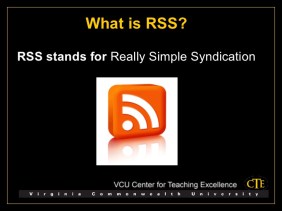
One of the advantages of digital curation is that it makes obscure material more easily accessible such as through search engines, due to the curator’s structured curation and active categorization, and this can prove to be of great use for students wishing to research a specific topic in-depth (Zhong, Shah, Sundaravadivelan, & Sastry, 2013).
Generally speaking, news and content curation tools should include the capacities to gather, aggregate, filter content, publish curated material into a stream, and distribute, syndicate, and share the curated material to multiple media platforms (DeRossi, & Good, 2010). Scoop.it is another digital curation site which has proved to be invaluable for students and educators alike. As students interact to collectively curate material, they develop critical thinking and analytical skills by evaluating content, communication and writing skills, and perhaps most importantly, they experience a sense of digital citizenship and responsibility for their own learning (Johnson, 2013).

In today’s world, curating material for an on-line platform is a vital skill for students to learn, as it will help them in their future studies. In addition, comments from the community help student curators by providing feedback and insight into the material they are sharing, thus helping student curators become better collaborative researchers (Johnson, 2013).
References
DeRossi, L.C. & Good, R. (2010). The 15 basic traits of a news/content curation system.
http://www.masternewmedia.org/real-time-news-curation-the-complete-guide-part-
6-the-tools-universe/#ixzz2voik0DTw
Flintoff, K., Mellow, P., & Clark, K.P. (2014). Digital curation: opportunities for learning,
teaching, research, and professional development. In Transformative, innovative,
and engaging. Proceedings of the 23rd Annual Teaching Learning Forum, 30-31
January 2014. Perth: The University of Western Australia. http://ctl.curtin.edu.au/
professional_development/conferences/tlf/tlf2014/referred/flintoff.html
Johnson, L. (2013) Why Scoop.it is becoming an indispensible learning tool. Teach
Thought. http://www.teachthought.com/technology/why-scoop.it-is-becoming-an-
indispensible-learning-tool
Zhong, C., Shah, S., Sundaravadivelan, K., & Sastry, N. (2013). Sharing the loves:
Understanding the how and why of online content curation. ICWSM 2013
(The International AAAI Conference on Weblogs and Social Media) Conference
Proceedings. Boston. http://www.inf.kcl.ac.uk/staff/nrs/pubs/icwsm13.pdf
 A Digital Pedagogy for today's student